

The social media landscape has undergone a radical metamorphosis. Gone are the days when digital interaction was defined by the manual labor of capturing a photo, curating a caption, and waiting for the dopamine hit of engagement. Today, platforms have evolved into hyper-intelligent engines of personalization. Yet, this is merely the prologue. As the Internet of Things (IoT) matures, the boundary between our physical environment and our digital social presence is poised to dissolve entirely.
According to projections from IoT Analytics, the global ecosystem of connected devices is expected to surpass 50 billion units by 2035. This massive infusion of interconnected hardware suggests a future where social media is no longer a destination we visit, but a persistent, background layer of our daily existence.
The Genesis of Ambient Social Media
The integration of IoT into social media marks a shift from "active" to "ambient" content creation. Historically, social media was an explicit act of communication—a user broadcasting their life. In the near future, that broadcast will be automated.
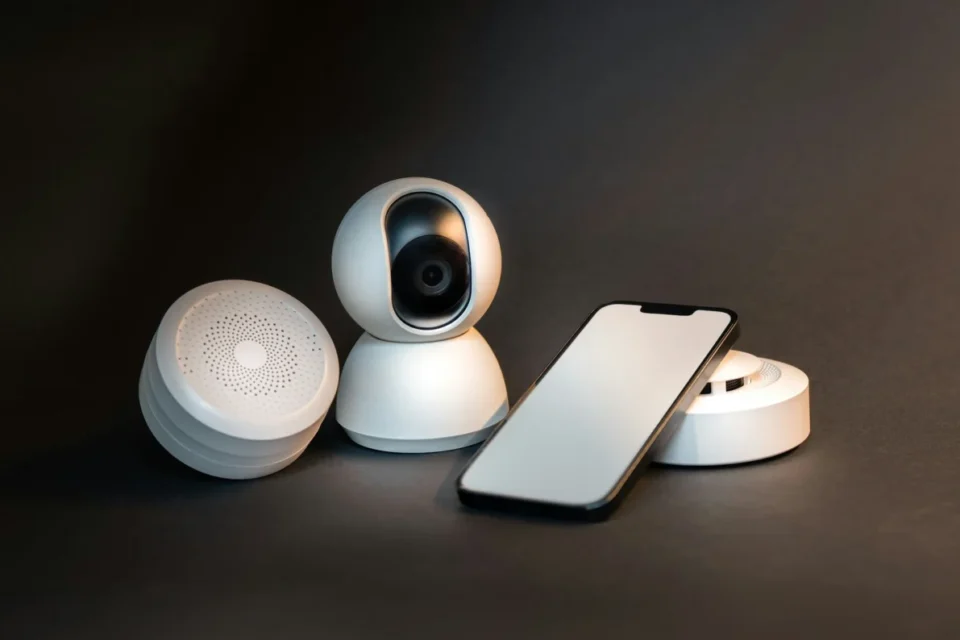
The fundamental premise of the Internet of Things is the creation of a vast, invisible web of devices—smart appliances, wearables, vehicle telemetry, and environmental sensors—that collect and exchange data autonomously. When this data is tethered to social media APIs, the nature of "sharing" changes. Instead of manually posting a workout, a fitness wearable could automatically update a user’s social circle upon the completion of a run. Instead of posting a review, a smart kitchen could poll a "Cooking Fam" group about specific grocery preferences based on real-time inventory depletion.
Chronology of the IoT-Social Integration
- The Early 2010s: The rise of basic connectivity, characterized by simple social sharing buttons on fitness trackers and rudimentary app integrations.
- 2018–2022: The platformization of smart home ecosystems, such as Samsung’s SmartThings, which began creating a unified data backbone for millions of users.
- 2024–2026: The current era of "Smart Integration," where AI models are being trained on IoT data to facilitate predictive engagement.
- 2027 and Beyond: The anticipated era of "Ambient Socialization," where AR glasses and ubiquitous sensor networks make social data a permanent, visual overlay of the physical world.
Supporting Data: The Scale of the Digital Footprint
The shift is fueled by unprecedented hardware adoption. In 2024 alone, over 156 million smartwatches were shipped globally. Each unit acts as a localized data node, capturing GPS coordinates, heart rate variability, sleep quality, and physical exertion.
When this data is synthesized by social media giants, the predictive capacity of the algorithm increases exponentially. Research from PWC indicates that 51% of consumers desire highly personalized content, yet the implications for data privacy and mental health remain complex. The industry is currently facing significant scrutiny, as evidenced by ongoing litigation—such as the Facebook mental health lawsuits—which argues that algorithmic design can intentionally foster addictive behaviors in younger demographics.
As IoT adds layers of physiological and behavioral data, the "predictive feed" may soon evolve into a "coercive feed," where platforms understand a user’s emotional state through biometric sensors before the user even articulates a thought.
Implications: Four Pillars of Transformation
The integration of IoT and social media is not merely a feature update; it is a structural redesign of how humans interact with the internet.
1. Real-Time, Auto-Generated Content
The friction of content creation—the "camera, caption, post" workflow—is the primary bottleneck of current social platforms. IoT removes this friction. By utilizing edge computing, devices can distill raw data into social-ready narratives. A road trip, for instance, could be chronicled by the car’s sensors, automatically stitching together location data, scenic photos from exterior cameras, and local history snippets to update followers without the driver ever touching a smartphone.
2. Hyper-Personalization and Predictive Feeds
When platforms synthesize IoT data (sleep cycles, purchasing history, and location habits) with traditional social metrics, they move from reactive to predictive. Your feed will no longer be a reflection of what you liked yesterday; it will be a forecast of what you need tomorrow. While this offers immense convenience, it raises the specter of "algorithmic bubbles" that are far more difficult to escape, as they are anchored in the physical reality of the user’s life rather than just their digital clicks.
3. The Death of Traditional SEO: Social Discovery
Search engines are currently losing ground to social platforms as the primary discovery tool for Gen Z. As IoT devices integrate with social databases, social media becomes the primary decision-making engine of the household. A smart fridge suggesting a recipe based on trending social media content, or a car dashboard prioritizing restaurants with the highest sentiment score on a local community group, represents a new paradigm: "Social SEO." Brands that cannot optimize for this real-time, sensor-driven social discovery will effectively become invisible.
4. Seamless Augmented Reality (AR) Experiences
The final frontier of this integration is the visual overlay. With the adoption of advanced wearables like Ray-Ban’s Meta smart glasses, social media is being untethered from the handheld screen. In the future, walking down the street could reveal floating social tags, ratings, and friend interactions pinned to physical locations via AR. This turns the entire world into a social interface, where the barrier between the digital and physical is effectively erased.
Official Responses and Regulatory Challenges
Regulatory bodies worldwide are currently playing a game of catch-up. The European Union’s GDPR and the California Consumer Privacy Act (CCPA) are the first lines of defense, but they are ill-equipped for the sheer volume of data generated by an IoT-integrated social experience.
Privacy advocates warn of the "Total Data Breach" scenario. If an IoT network—which controls the locks on your doors, the temperature of your home, and your health metrics—is compromised through a social media platform breach, the potential for harm extends far beyond stolen passwords. It involves the compromise of the physical safety and privacy of the home.
Industry leaders, however, maintain that robust encryption and "privacy-by-design" will mitigate these risks. Companies like Meta and Google are investing heavily in federated learning—a technique where AI models learn from user data locally on the device, without the raw data ever leaving the user’s hardware. Whether these technological solutions will satisfy regulators remains to be seen.
The Human Element: Will Connection Survive?
Despite the technological spectacle, a fundamental question remains: Will the soul of social media survive the automation of human expression?
The core appeal of social media has always been the illusion—or reality—of human connection. IoT can automate the logistics of sharing, but it cannot replicate the nuance of empathy, the spontaneity of a thoughtful message, or the depth of a shared human experience.
The danger lies in allowing the convenience of automated content to replace the intentionality of human interaction. If we reach a point where our devices are "socializing" on our behalf, we risk creating a digital landscape that is perfectly efficient but profoundly hollow.
Ultimately, the Internet of Things is a set of tools—sophisticated, pervasive, and powerful. However, the architecture of our digital society is not predetermined by the hardware we buy. It is determined by the choices we make as users, the standards we demand from developers, and the regulations we enforce as a society. We are entering an era where our devices will know us better than we know ourselves; the challenge will be ensuring that this intimacy serves to enrich our human connections rather than replace them.